Why Doesn’t My Cash Total Match? Common Counting Mistakes Explained
Learn how common cash counting errors, denomination mix-ups, and duplicate entries can cause a cash total mismatch, and how to check your count.
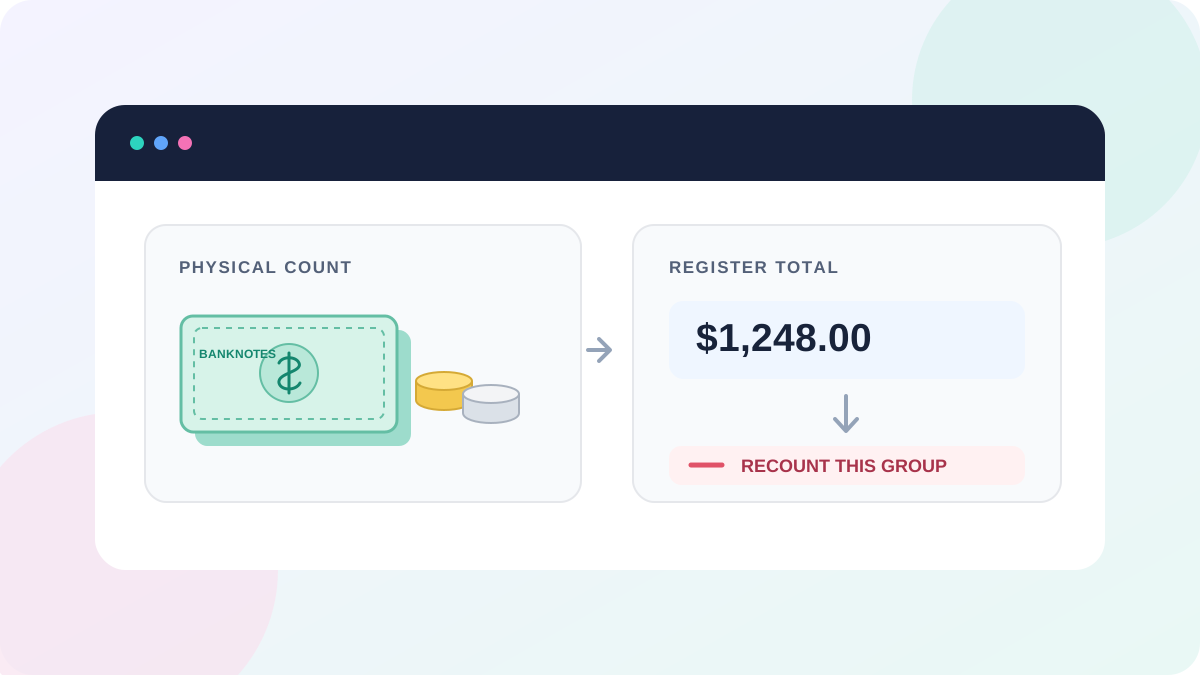
Nothing ruins a tidy cash count faster than two numbers that refuse to agree. A register may show one amount while the physical money shows another. Fortunately, most differences have identifiable causes. Understanding common cash counting errors makes it easier to locate the problem, correct the count, and strengthen your cash reconciliation process.
Why a Small Counting Error Can Change Your Final Cash Total
A single missed bill can change the final cash total immediately. Imagine accidentally overlooking one $20 note. Your physical money contains $20 more than your recorded amount. Small errors can become larger when several denominations are involved, especially during a rushed cash count.
How Mixing Different Denominations Causes Incorrect Totals
Mixed stacks create confusion because different notes look and feel different while being counted quickly. If a $10 bill gets placed inside a $20 stack, the subtotal becomes inaccurate. Keeping each currency denomination separate creates a cleaner cash tally and makes verification easier.
Why Skipping One Bill Stack Can Make Your Drawer Short
Sometimes the arithmetic works perfectly while the physical count remains wrong. The culprit may simply be an overlooked stack. When counting a cash drawer, move through denominations in a fixed order. This routine reduces the chance of forgetting an entire group.
How Misreading a Bill or Coin Value Affects the Calculation
A wrong denomination can distort the calculation immediately. Entering ten $5 bills as ten $10 bills doubles that subtotal. The same problem can occur with coins. Always compare the displayed denomination with the physical money before recording the banknote value or coin value.
Why Entering the Wrong Quantity Produces a Completely Different Result
Quantity errors are another common source of cash variance. Entering sixteen bills when you actually counted fifteen creates an incorrect subtotal. For this reason, pause after every stack and confirm the denomination quantity before moving forward.
How Duplicate Counting Can Make Your Cash Appear Higher
Duplicate counting creates an inflated total. You might count a stack, move it aside, and accidentally include it again. To prevent this cash counting mistake, place completed stacks in a separate area. Physical movement can act like a visual checklist.
How to Recount Your Cash When the Numbers Do Not Match
When your cash count does not match, resist the temptation to start randomly recounting everything. Begin with the largest denomination difference. Then review smaller denominations systematically. This approach makes it easier to find cash discrepancy without creating another counting error.
How to Compare Your Physical Count With the Calculator Breakdown
A cash discrepancy calculator becomes useful when each denomination has its own recorded quantity. Compare expected and actual quantities row by row. If the $20 category differs while every other category matches, you have narrowed the investigation considerably.
| Problem | Possible Cause | Check |
|---|---|---|
| Short cash | Missing bill | Recount stack |
| Extra cash | Duplicate entry | Review quantities |
| Coin difference | Wrong coin value | Separate coins |
| Large variance | Skipped denomination | Review every group |
How to Build a Two-Pass Cash Counting Routine
A two-pass method adds another layer of cash verification. First, count every denomination normally. Record the results. Then perform a second count independently. Compare both sets of numbers before accepting the final cash balance.